From ‘Herbivores’ to ‘Fasting’: Japan’s Young Singles Are Rethinking Marriage
For the first time, fewer than 80 percent of unmarried Japanese adults ages 18 to 34 say they intend to marry. A national survey reveals changing expectations about love, parenthood and life alone.

TOKYO, JAPAN (MERXWIRE) – For years, Japan had a shorthand for young men who appeared reluctant to pursue romance: “herbivores.” The term suggested passivity rather than outright rejection — an appetite for relationships that was modest, or at least less assertive than convention expected. Now, the metaphor of romantic “fasting” offers a more pointed way to frame the country’s demographic anxiety. The question is no longer simply why some young people are slow to find a partner, but whether marriage and parenthood remain part of the future they want.
A nationwide survey provides evidence of that changing outlook. For the first time, fewer than 80 percent of unmarried men and women ages 18 to 34 said they intended to marry someday, according to Japan’s National Institute of Population and Social Security Research. More than one in five said they had no intention of ever marrying. Yet the findings do not describe a generation uniformly abandoning relationships: Most still expected to marry, and some who ruled it out acknowledged that they might change their mind
The institute’s 17th Japanese National Fertility Survey, conducted in June 2025 and released in September 2026, examines unmarried adults’ expectations alongside married couples’ experiences. Drawing on 1,000 randomly selected survey districts nationwide, it collected 6,756 valid responses from unmarried adults and 5,024 from married couples, with wives answering the couples’ questionnaire. The two components provide complementary perspectives on family life, rather than following the same people from single life into marriage and parenthood. They reveal both changing intentions and the difficulties some couples encounter in realizing earlier plans.
Among unmarried men ages 18 to 34, 75.1 percent said they intended to marry eventually, down from 81.4 percent in the previous survey in 2021. Among women, the share fell to 77.8 percent from 84.3 percent. The declines brought both figures below 80 percent for the first time. Marriage remains the majority expectation, but its position as an almost automatic destination in adult life is weakening.
| Respondents | 2021 | 2025 | Change |
|---|---|---|---|
| Men | 81.4% | 75.1% | −6.3 percentage points |
| Women | 84.3% | 77.8% | −6.5 percentage points |
Neither “herbivore” nor “fasting” is a category used by the survey, and an intention not to marry is not the same as a rejection of romance. About four in 10 respondents who said they did not intend to marry acknowledged that they might eventually decide otherwise. That uncertainty matters: People who prefer not to marry, those who remain undecided and those who want marriage but have not found suitable circumstances are not facing the same question. A single generational label can obscure those differences.
Being single also does not necessarily mean looking for a partner. The survey found that 19.6 percent of unmarried men and 27.8 percent of unmarried women had a romantic partner, while roughly one-third of unmarried respondents did not want a relationship. Among younger respondents, wanting to enjoy hobbies and leisure became a slightly more common reason for remaining unmarried. Among those 25 and older, not having found a suitable partner remained the leading reason, though its share declined.
Other answers suggest that financial constraint and comfort with independence can coexist. More unmarried respondents reported having little money for things they wanted, while more also said they did not feel lonely living alone. Meanwhile, fewer saw advantages in marriage such as financial comfort, emotional stability or having children and a family, even as the appeal of living with someone they loved increased. The findings suggest not a simple disappearance of affection, but a reassessment of what marriage offers and whether its practical benefits justify changing an established way of life.
The routes into relationships are expanding at the same time. Among married couples covered by the survey, the share who met online, including through apps, rose to 20.2 percent from 11 percent in the previous survey, while workplace and friend-mediated introductions declined. Digital platforms have become an important point of entry into relationships. But the expansion has occurred alongside falling marriage intentions, underscoring that meeting someone and deciding to marry are separate questions.
| Survey year | Share |
|---|---|
| 2021 | 11.0% |
| 2025 | 20.2% |
For people already seeking a partner, an online introduction may open a door that their existing social circle does not. It cannot, by itself, resolve uncertainty about the life on the other side — how two people would combine finances, employment, housing and expectations about children. The survey’s online figure measures how married couples met, not how often platform users marry. It therefore cannot establish that digital matchmaking has reversed declining interest in marriage.
Parenthood is also becoming a more distinct choice rather than an assumed consequence of marrying. The average number of children unmarried men hoped to have fell to 1.64 from 1.83, while the figure for women declined to 1.70 from 1.79. Roughly one in six unmarried men and women did not want children even if they married, and support weakened for the idea that married people should have children. Choosing a spouse and choosing to become a parent increasingly need to be understood separately.
Married couples were planning smaller families, too. Their average ideal number of children fell to 2.18 from 2.25, while the number they planned to have dropped to 1.95 from 2.01, falling below two for the first time. The institute reported an increase in couples planning only one child and weakness in the progression from a first birth to a second. An average below two does not mean that most couples want only one child; it reflects the combined plans of households with different circumstances.
| Measure | 2021 | 2025 |
|---|---|---|
| Children unmarried men hope to have | 1.83 | 1.64 |
| Children unmarried women hope to have | 1.79 | 1.70 |
| Married couples’ ideal number of children | 2.25 | 2.18 |
| Married couples’ planned number of children | 2.01 | 1.95 |
For some couples, the problem was not a lack of desire but an inability to realize an earlier plan. Roughly one-third had not achieved the number of children they envisaged when they married, rising to about half among couples in which the wife first married at 30 or older. That association does not establish that later marriage alone caused the shortfall. Finances, health, fertility and care arrangements may also shape what becomes possible, and they should not be collapsed into a single explanation.ipss.go+1
Among reasons for having fewer children than their ideal number, couples increasingly cited the expense of raising them and the psychological and physical burden of child care. Separately, 22.8 percent of couples — about one in 4.4 — had undergone infertility testing or treatment. Those experiences complicate descriptions of falling births as simply a matter of unwillingness. Choosing not to have children and wanting children but being unable to have them are different circumstances, requiring different forms of understanding and support.
Other findings point to substantial changes within households. Among wives who had their first child between 2020 and 2024, 80.5 percent continued working around the birth, up from 69.9 percent among those whose first child was born between 2015 and 2019. Of those who continued working, 82.4 percent used child care leave. These figures show that employment and parenthood are increasingly being combined, but they do not establish that work-family conflict has disappeared or that care responsibilities are evenly divided.
Japan has expanded policies intended to ease some of those pressures. Its child allowance system now extends through high-school age and no longer imposes an income limit, with monthly payments of ¥30,000 for a third and subsequent child under the program’s counting rules. Workplace provisions that took effect in October 2025 also require employers to offer workers raising children ages 3 to school entry a choice from at least two measures supporting flexible work. The available categories include adjusted hours, remote work, child care support, additional leave and shorter working hours.
The survey cannot establish the effect of those October workplace provisions because its reference date was in June 2025, before they took effect. Nor can it demonstrate that a particular payment or work arrangement will persuade someone to marry or have a child. It does reveal a range of issues policy must confront: financial costs, care burdens, changing expectations and the distance between the family people might want and the one they believe they can manage. Evaluating new measures will require later evidence.
The survey itself has limits. Valid response rates were 42.7 percent for the unmarried survey and 47.9 percent for the couples’ survey, and the latter reflects wives’ answers rather than separate responses from both spouses. Its averages describe groups, not a prescribed course for an individual life. Being without a partner, not wanting to date, not intending to marry and not wanting children are distinct positions; combining them into one label risks obscuring more than it explains.
The shift from “herbivores” to “fasting,” then, is best understood as a provocative metaphor rather than a diagnosis. Some young adults still hope to find a spouse; others prefer single life, want marriage without children or hope for a family they have not been able to build. The clearest change is not a universal loss of appetite for love, but a widening range of choices about what should follow it. Japan’s challenge is to respect those different futures while reducing the obstacles faced by people who want to marry or raise children — so that an intention has a better chance of becoming an everyday life.
More News
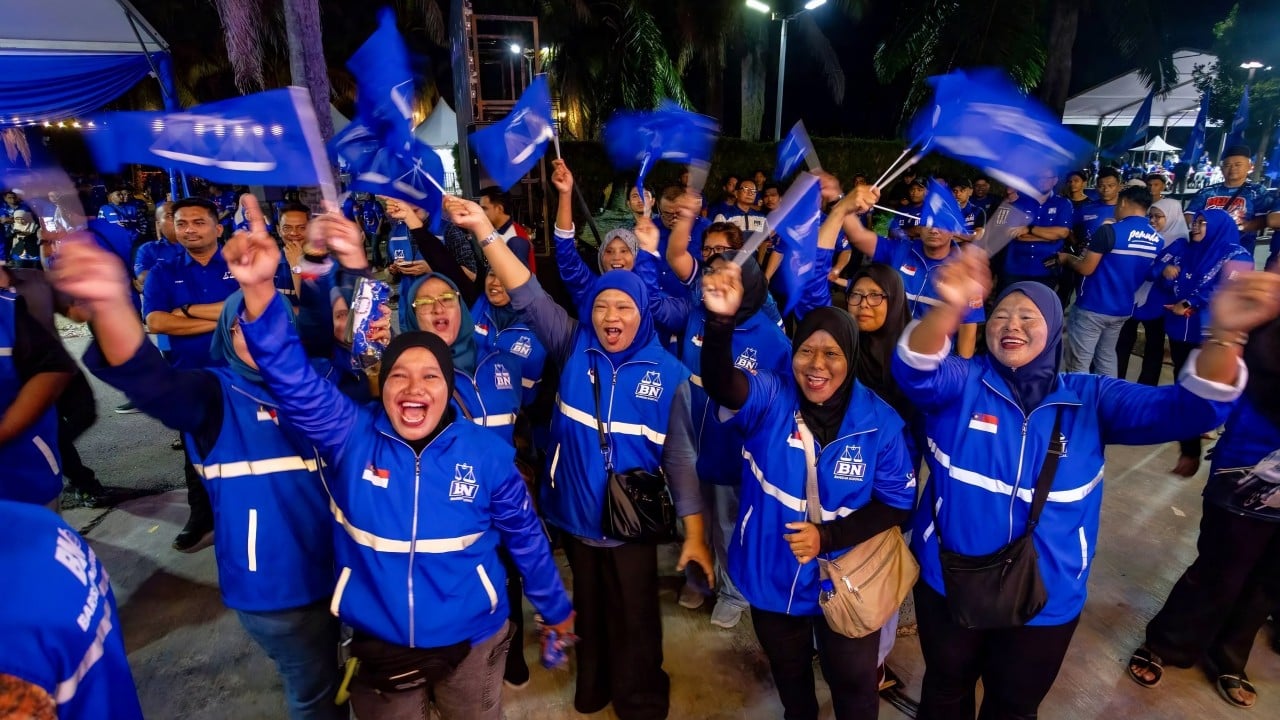
Malaysia’s Melaka poll begins as 79 cleared in test for Anwar’s coalition
Malaysia’s Melaka state began its election campaign on Saturday after 79 candidates were cleared to contest a poll testing whether Prime Minister Anwar Ibrahim’s governing partners can turn an opportunistic alliance with his Islamist opponents into a platform for national power. The coastal state south of Kuala Lumpur heads to the polls on November 14, handing the United Malays National Organisation (Umno) and the Pan-Malaysian Islamic Party (PAS) another opening to deepen cooperation after...

Fahmi: LLM top brass must answer if govt 'misled' over TuJu
Govt spokesperson calls for accountability amid controversy over navigation app.

KINIGUIDE | Malacca polls hot seats and a rare opportunity for kancil party
Mkini breaks down key seats readers should keep an eye on and other factors.

Rauf to continue as CM if BN wins Malacca polls - Zahid
MALACCA POLLS | This is subject to the consent of the state governor, BN chief says.

Hadi, Khaled eye BN-PN cooperation beyond Malacca polls, into GE16
MALACCA POLLS | It is to foster greater unity among Malays, Umno veep says.

Moroccan student's journey from knowing only the local words for 'hello' to becoming Vietnam's top maritime navigation graduate
After dropping out of medical school in France and isolating herself for seven months while struggling with depression, a Moroccan girl turned to Vietnam as a way out of her difficulties and went on to graduate as the top student in maritime navigation.

AGC: We have no part in border agency chief's return to police
AG says the department has neither been consulted nor issued any legal opinion.

King's College Wimbledon HCMC campus completes main structure ahead of 2027 opening
King's College Wimbledon Ho Chi Minh City has completed the main structure of its campus at The Global City, with construction scheduled to finish in the second quarter of 2027.

Malacca polls: Party bigwigs rally behind candidates as nominations open
MALACCA POLLS | Supporters turn nomination centres into colourful displays of political rivalry.

Haze pollution costs Malaysia $1.9B, potentially claims 1,700 lives: report
Malaysia’s latest haze crisis is estimated to have caused RM8 billion (US$1.97 billion) in welfare losses and may have contributed to approximately 1,700 premature deaths, according to a newly released report.

Vietnamese American professor and wife shot dead by 31-year-old son, police say
A man has been charged with murdering his Vietnamese American father, an Oberlin College professor, and stepmother at their Ohio home.

YOURSAY | CSA: Unpopular but necessary
'An electoral pact would require a separate agreement.'
YOUR NEWS, OUR NETWORK.
Do you have Great News you want to tell the world?
Be it updates about your business or your community, you can make sure that it’s heard by submitting your story to our network reaching hundreds of news sites across 6 verticals.